Showing posts with label digital literacy. Show all posts

Friday, 22 April 2022

Things in the library 22nd April


Things about new staff...

As I'm sure most of you are aware, Gill Kaye retired last year, leaving a very large blog shaped hole. My name is Jessica, and I'm the new(ish) Assistant Librarian, and that makes me the new blogger too. I used to do a very similar job at Barnsley Hospital, and I have travelled many library sectors in the past, working in academic, public, museum and science research libraries. It's nice to meet you!

Things about digital literacy...

The London School of Economics has written an article on how digital literacy interventions can safeguard young people from the impact of online harm. It found that children and young people with poorer mental health and wellbeing can be more susceptible to victimisation online and discusses building digital resilience in children and young people. Recommendations include: finding ways to protect children from online harm whilst not restricting the positives of internet use; and carrying out further research into the link between digital literacy and wellbeing.

Things about mental health and wellbeing...

The Department of Health and Social Care (DHSC) has opened a consultation on mental health and wellbeing in England. This is being conducted to facilitate the development of a ten-year plan on mental health. Views will be gathered on areas such as improving wellbeing in children and young people. The Department is looking to gain various views from those who work with people who may be affected by mental ill-health such as children and young people. The deadline to complete the survey is 05 July 2022. 

The Mental Elf writes about social media and the promotion of disordered eating, focusing on a study from Monash University looking at the language used, the hashtags coined and the way in which users interact on Twitter in order to propel this Pro-ED movement forwards.

Things about children in care...

The Nuffield Family Justice Observatory has published a report summary sharing conclusions drawn from a recent study. As part of the study, 24 care-experienced children between the ages of 10 and 17 in England and Wales were interviewed to find out more about their journeys through the care system. Findings include: young people felt that they were placed on ‘opposing teams’ to their parents during the court process; support networks were broken down rather than sustained; children experienced feelings of loneliness and stigma; and supported placements were too focused on surveillance rather than development. Recommendations include: encouraging children to be informed and involved in decisions about their care, and helping children to maintain relationships and support networks.

Things about drawing...

Sheffield Museums are offering a mindful drawing class at Millennium Gallery. Embrace mindful drawing and enjoy an evening developing your sketching skills, working from different still life objects each week. Don’t worry if you’ve not picked up a pencil since school – it’s a relaxed and friendly group where all are welcome, from the more experienced artists to the absolute beginners. You can join any class through until June, on a Wednesday evening. 


Things lost...

We have some black glasses that were left in the library. If they are yours and you want them back, please come and get them!


Things to make...

I'm going to be keeping up the tradition of sharing a recipe at the end of the blog as I love cooking and sharing food. This tomato and coconut cassoulet by Anna Jones is one of my favourite really easy, flavoursome and satisfying meals to make. 


Friday, 26 February 2021

Things in the library 26 Feb...

 Things to join...

I don't know where February has gone but already it is nearly time for the next Reading Group meeting. This month we are discussing Ben Elton's 'High Society' about the pervasive nature of illegal drugs within society. If you want to join us please contact the library for the link - we meet online on the first Wednesday of every month at 18:30 for about 1 hour.  Our next book will be 'Once upon a River' by Diane Setterfield. 

Things about digital technology... 

Digital technology can support the NHS to deliver high quality specialist care more efficiently. To achieve these digital advances, the right environment for innovation, education and collaboration needs to exist. On the 24 March there is an event as part of National Health Executive's NHE365 Festival  'Achieving Digital Efficiency' - a topic in which has been a top priority during the global pandemic.

Things online...

As well as Reading Group going online we have developed more of our training to be available in this way and this could be something we continue even after the pandemic. It is useful for people based away from the Acute site of the hospital and hopefully will also reduce the number of people not turning up for booked training.

We now run our popular Critical Appraisal Course online. Please email the library if you would like to participate. There needs to be a commitment from participants to engage with all three elements of the course.

Virtual Critical Appraisal Course (SCH employees only)

The course is in 3 parts and all 3 must be completed, a certificate is awarded on completion

Part 1 Course slides and workbook

Part 2 Article appraisal

Part 3 Microsoft teams meeting to discuss workbook answers and article appraisal

Things about Girls... 

For over a decade, Girlguiding’s research has captured girls’ and young women’s lives, highlighting their views, experiences, and the challenges they face. From gender stereotypes to body image concerns, girls and young women continue to face unequal pressures and barriers to living confident and full lives. Now, as well as these, they are confronting the impact of the Covid-19 pandemic. It has radically changed their lives and opportunities and shaped their perspectives. Through this recent publication 'Back in lockdown: Girls’ and young women’s hopes and fears for the future', girls’ and young women’s voices reveal how they’re coping with the profound changes that have occurred in their lives over the past year. They tell us about the things they’re finding hard, what they’re concerned about and their hopes for the future. This research builds on the Girlguiding's previous survey with girls and young women in May 2020. 

Things about SEN... 

This House of Commons Library briefing sets out the system of support for children and young people in England aged 0-25 with special educational needs (SEN). The briefing provides an overview of the new system introduced in 2014, the transitional arrangements, and how the new system differs from that which preceded it. It also includes a brief history of the movement towards reform that preceded the 2014 changes, and information on the impact of the new system available to date.

Things about carbs and fats... 

A recent study in Nature Medicine was highlighted recently by NIH Research Matters.  The amount and types of food available to the average person have changed over time. These changes are believed to contribute to the rise in obesity by promoting increased calorie intake. Excess weight can cause various health problems, including diabetes, heart disease, and stroke. 

There has been a great deal of debate over what aspects of our food have promoted obesity. High carbohydrates are believed to result in large swings in your body’s insulin levels, which may cause increased hunger and calorie consumption. High-fat foods may promote increased calorie consumption because they contain more calories per bite and can leave you feeling less full. 

In the research when on the low-fat diet, the participants ate 550 to 700 fewer calories per day than when on the low-carb diet. Despite the large differences in calorie intake, they reported no differences in hunger, enjoyment of meals, or fullness between the two diets.

People lost weight on both diets, but only the low-fat diet led to a significant loss of body fat. The low-fat diet resulted in higher blood glucose and insulin levels compared with the low-carb diet. This is a concern because variable glucose levels can be a risk factor for coronary artery disease.

“Interestingly, our findings suggest benefits to both diets, at least in the short-term. While the low-fat, plant-based diet helps curb appetite, the animal-based, low-carb diet resulted in lower and more steady insulin and glucose levels,” Hall says. “We don’t yet know if these differences would be sustained over the long term.”

The researchers note that the study was not designed to make diet recommendations for weight loss. Results may have been different if the participants were actively trying to lose weight. Further, results may be different outside the lab, in which all meals were prepared and provided in a tightly controlled clinical environment. Factors such as food costs, food availability, and meal preparation constraints can make adherence to diets challenging.

Things about digital resilience... 

NSPCC Learning has released a podcast looking at the NSPCC's InCtrl service, designed to prevent technology-assisted child sexual abuse by supporting children and young people to build digital resilience. The podcast discusses: concerns that lead to children being referred to InCtrl; how practitioners work with young people on their online behaviour; the importance of involving parents and carers; and how children and young people’s views have been incorporated into the development and implementation of the service. Listen to the podcast or read the transcript : Building children and young people’s digital resilience

Things to make...

A beautiful spring-like day today but still cold. So a perfect meal would be this vibrant  Green pesto minestrone which is really easy to make.


Friday, 7 July 2017

Things in the Library 7th July

Things about reading group...
We held our second meeting this week discussing 'Elizabeth is Missing' and we gave it a score of 76%. Our next book is “Fried Green Tomatoes at the Whistle Stop Cafe” by Fannie Flagg

“The day Idgie Threadgoode and Ruth Jamison opened the Whistle Stop Cafe, the town took a turn for the better. It was the Depression and that cafe was a home from home for many of us. You could get eggs, grits, bacon, ham, coffee and a smile for 25 cents. Ruth was just the sweetest girl you ever met. And Idgie? She was a character, all right. You never saw anyone so headstrong. But how anybody could have thought she murdered that man is beyond me.” Fried Green Tomatoes at the Whistle Stop Cafe is a mouth-watering tale of love, laughter and mystery. 
We are a friendly bunch and enjoying discussing our reading over a drink and some nibbles. Do come along if you enjoy reading and chatting 1st Wednesday of every month in the library at 17:15 for about 1 hour.

Things about ADHD...
An article in Journal of Attention Disorders 'Examining the Relationship Between Children’s ADHD Symptomatology and Inadequate Parenting: the role of household chaos.' This study examines the interrelations of parenting practices, emotional climate, and household chaos in families with children with and without ADHD. In particular, indirect pathways from children’s ADHD symptomatology to inadequate parenting and negative emotional climate via household chaos were investigated.


Things about research...
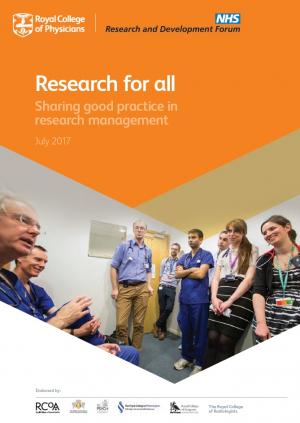
The  Royal College of Physicians have produced a document "Research for all: Sharing good practice in research management" this document outlines the conditions needed to support research directors, managers, clinical and non-clinical staff and, ultimately, patients. The added examples of good practice from NHS organisations around the country aim to help build the knowledge base for all involved or wanting to be involved in research. By recognising and addressing barriers to pursuing research, both doctors and R&D departments can underpin research as a core activity and demonstrate how it is everyone’s responsibility.


Things about the genome...
A report from the Chief Medical Officer (Prof Dame Sally C Davies) entitled 'Generation Genome' has been published and she takes a detailed look at genomics, exploring how we currently utilise genomics in our health and care system and how its potential may be developed. She says in her foreword:
"Genomics is not tomorrow. Its here today. I believe genomic services should be available to more patients, whilst being a cost-effective service in the NHS. This is exciting science with the potential for fantastic improvements in prevention, health protection and patient outcomes"

Things about digital literacy...
A report published by RCN and HEE on Improving Digital Literacy states that:
"Sound literacy capabilities are needed by everyone working and learning in health and social care if we are to maximise the potential of technology and digital in health and social care. It’s no longer possible to think about digital literacy as either purely technical proficiency or just something ‘other people’ do. We all need the right digital knowledge, skills, attitudes and behaviours that will enable us to provide the best possible care for all".  They define digital literacy as: "the ability for everyone working in healthcare being able to learn, work and develop effectively in a digital workplace and society."
Here in the Illingworth library we consider ourselves to be digitally literate and we are always trying out new ideas and ways of working. If you or your department need any help do consider asking us or Book a Librarian for a training session.

So with the next Reading Group in mind...
From the book:
1 green tomato per person
White cornmeal
Bacon dripping
Salt & pepper
Slice tomatoes 1/4 thick and season then coat with cornmeal - heat the dripping then fry on both sides until lightly brown.
"You'll think you died and gone to heaven"

Or if you prefer a posher version Nigel Slater's is here Fried Green Tomatoes