Showing posts with label health & social care. Show all posts

Friday, 6 August 2021

Things in the library 6 August...

 Forty things... 

Someone asked me recently “was I counting the days until my retirement” …well I wasn’t …but I did & found I had 40 of my working days left. So I thought I would spend my last 40 days telling everyone something  different about the library on each of those days via our Facebook page or on Twitter using the hashtags  #40things #GillRetiring . When I made a list I found so many things I wanted to tell people about that I might have to postpone my leaving day 😄. So do follow us to find out what 40 things I have chosen.

Things for new starters... 

If you have new rotating doctors in your area or as colleagues please make sure that they know about the library and all our services. Everyone in the trust gets our Monday morning bulletin so do encourage them to glance through this and also to join the library to make the best use of our services whilst they are with us. Whether it is for training, literature searches, current awareness services or leisure reading or a place to work, they will be very welcome. They can find full details of everything to offer on our website.

Things green... 

Sheffield has been blessed with many green open spaces within the city boundaries - many thanks to be benefactor J G Graves. This greenground map produced by Outdoor City and University of Sheffield shows 365 of them.

Things about mindfulness... 

An interesting article spotted this week looks at Yoga and Mindfulness Interventions for Preschool-Aged Children in Educational Settings: A Systematic Review which can be downloaded from this link. They conclude that this systematic review provides some evidence that yoga and mindfulness are promising practices for addressing social emotional development among preschool-aged children.

Things about social and ethnic groups... 

A  population-based retrospective cohort study has published the results of  research looking at the social and ethnic group differences in children’s use of healthcare services in England, from 2007 to 2017. They conclude:

Between 2007 and 2017, children living in more deprived areas of England made greater use of emergency services and received less scheduled care than children from affluent neighbourhoods. Children from Asian and black ethnic groups continued to consult GPs more frequently than children from white ethnic groups, though black children had significantly lower outpatient attendance rates than white children across the study period. Our findings suggest substantial levels of unmet need among children living in socioeconomically disadvantaged areas. Further work is needed to determine if healthcare utilisation among children from Asian and black ethnic groups is proportionate to need.

The full text of the article and supplementary material  in Archives of Disease in Childhood can be accessed by this link. 

Things about opening hours... 

We are now open one evening a week (Tuesdays) until 7pm if you need to use the library and/or the computers.


Things about Children and young people’s mental health... 

Researchers at the University of Birmingham have published initial findings from the early evaluation of the Children and Young People’s Mental Health Trailblazer programme, a programme funding the creation of mental health support teams working in schools and further education colleges in England. An evaluation of the first wave of mental health support teams and education mental health practitioners, working with more than a thousand schools and colleges, include: schools and colleges welcomed the funding of additional capacity to provide in-house mental health support and participants raised concerns about gaps in support, especially for children and young people whose needs were not ‘mild to moderate’ (the group that the teams are designed to support) but also not serious enough to meet the referral criteria for specialist services. The final report from the early evaluation will be published in summer 2022.

Things to read... 

The next virtual Reading Group meeting will be on Sept 1st at 18:30 to 19:30 - all are welcome, please contact the library for the joining link. The book we will be looking at is 'West' by Carys Davies.

When widowed mule breeder Cy Bellman reads in the newspaper that colossal ancient bones have been discovered in a Kentucky swamp, he sets out from his small Pennsylvania farm to see for himself if the rumours are true: that the giant monsters are still alive and roam the uncharted wilderness beyond the Mississippi River. Promising to return within two years, he leaves behind his daughter, Bess, to the tender mercies of his taciturn sister, Julie. With only a barnyard full of miserable animals and her dead mother’s gold ring to call her own, Bess fills lonely days tracing her father’s route on maps at the subscription library in town and shrinking from the ominous attentions paid to her and her aunt by their neighbour and sometimes yard hand, Elmer Jackson. Bellman, meanwhile, ventures farther and farther from home, across the harsh and alien landscapes of the West in reckless pursuit of the unknown.

Things to make... 

Greengages (Reine Claude in France) are, I think, my favourite plum (sorry Victorias ...you are a close second) and spotted in the shops yesterday. They can vary in quality but good ones are fabulous. If you want to cook with them this Nigel Slater frangipane tart is good (you can always cheat with a ready-made pastry case if pastry isn't your thing.

Friday, 6 November 2020

Things in the library 6 Nov...

 Things still open... 

The Illingworth Library will be remaining open during 'Lockdown 2'. The opening hours are 8:45 - 17:00 Mon - Friday but most of our services are available remotely, so there is no need to come into the library if you do not wish to do so. 

We will be issuing books as normal during this time and so will be continuing to charge fines.

If your book is due for return and you are not able to (or do not wish to) do so in person then please renew it to avoid charges. You can renew books by logging in to your library account online http://illingworth.cirqahosting.com/ or by using the library app, by phone or by email.

If you do visit the library please only do so if you are well. You must wear a mask , observe social distancing and use the hand sanitisers and wipes provided for you.

Things to celebrate...

The winner of our library catalogue treasure hunt was Louisa Wallbridge and Tom Mann won a prize for recommending someone new to take part in the Randomised Coffee Trial, both these events were part of our library 70th birthday celebrations. Well done both of you!


Things to read and plan... 
Our next Virtual Reading Group meeting is 2nd Dec where we will be discussing The Silver Sword by Ian Serraillier and choosing books to read next year.  It is our Christmas party so members may dress in festive garb, have hats, mince pies and mulled wine…or just turn up online completely normal if  they wish! The meeting will start at 18:30 but may last longer than normal. Contact the library if you wish to be added to the mailing list.
The Silver Sword is taken from accounts of actual events, the silver sword became the symbol of hope and courage which kept four deserted and starving children alive through the years of occupation in Warsaw, and afterwards on the search to find their parents.


Things about society...  
A free, online festival showcases the University of Sheffield’s world-leading social science researchers and their work on tackling some of the greatest problems facing society today.

Join them from 7-15 November for a series of talks, debates, films, podcasts and interactive exhibitions. This is part of the national ESRC Festival of Social Science. Details of events and exhibitions can be found on these links.

Things about disadvantge during Covid-19...
Oxford Brookes University has published a study looking at family life and early child development in the UK during the coronavirus pandemic. Findings, based on the experiences of over 500 parents of under-3-year-olds, include: 90% of families reported an increase in enriching activities (like talking, reading and playing together) during lockdown; however, during, but not before, lockdown socio-economically disadvantaged parents were less likely to engage in enriching activities with their children. 
They recommend that

  • Children from disadvantaged families should be given extra support to promote their early development
  • Communal outdoor spaces and libraries should be closed only as a last resort in lockdowns

Things about child growth... 
In the news today a study which aimed to estimate age trajectories and time trends in mean height and mean body-mass index (BMI), which measures weight gain beyond what is expected from height gain, for school-aged children and adolescents. If you want to read more than the news headlines then the full article is available. their interpretation of results is that the height and BMI trajectories over age and time of school-aged children and adolescents are highly variable across countries, which indicates heterogeneous nutritional quality and lifelong health advantages and risks. Some very colourful infographics!

Things to make... 
No big bonfire parties this year for us sadly though we will still be setting off a few fireworks tomorrow and eating some festive fare. Probably we will be streaming the event to our son in the Netherlands, to whom I had to post an emergency pack of stuffing this week so that he can also make our famous pork sandwiches! Given my store of apples I might have a go at these homemade toffee apples


Friday, 30 October 2020

Things in the library 30 Oct...

 Things in the library not so much... 

Now we are in Tier 3 restrictions the library staff are taking it in turns to work in the library so there is only ever one of us physically in the library, the others will be working at home. So if you come into the libray there may be a short delay if we are dealing with another customer or taking a phone enquiry. The library remains open Mon-Fri 8:45 to 17:00, please adhere to our social distancing and safety guidelines.

Things to attend...

'Ella Minnow Pea' is the book being discussed this week at Reading Group. Please contact the library if you would like the Teams link for this meeting on Wed 4th Nov at 18:30 till 19:30. 

Journal Club on Thu 5th Nov at 8:00 till 9:00 the paper being presented is 'The addition of fluoxetine to cognitive behavioural therapy for youth depression (YoDA-C): a randomised, double-blind, placebo-controlled, multicentre clinical trial'. Please contact the library if you need a copy of the paper. This is the link for joining in virtually.


Things about health care... 

The Care Quaity Commission recently published 'The state of health care and adult social care in England 2019/20'. The report looks at the trends, shares examples of good and outstanding care, and highlights where care needs to improve.In their summary they say: 

Over the summer, CQC reviewed the way health, social care and other local services worked together in 11 parts of the country. There were differences in the way they responded to the pandemic, but there is evidence that the places with established working relationships and an understanding of need in their local area were better able to care for their local population in a time of crisis. 

The reviews have brought into focus the learning that needs to be used to help plan for a longer-term response to the virus. It is essential that the right support is available for all parts of a local health and social care system to drive improvements where they are needed, and to involve voluntary and community organisations in promoting health and wellbeing.

In social care, COVID not only exposed but exacerbated existing problems.The sector, already fragile, faced significant challenges around timely access to PPE, testing and staffing – and coordinated support was less readily available than it was for the NHS.

Things about health inequalities... 

RCPCH has joined a new campaigning coalition; the Inequalities in Health Alliance (IHA). The Inequalities in Health Alliance (IHA) is calling for the Government to: 

1. Introduce a cross-government strategy to reduce health inequalities.

2. Government to commence use of the socio-economic duty, section 1 of the Equality Act 2010, which would ensure vulnerable people be considered in every policy decision they make

3. Adopt a ‘child health in all policies’ approach to policy-making 

The RCPCH say

The evidence consistently shows that poverty and inequality impact a child’s whole life, affecting their education, housing and social environment and in turn impacting their health outcomes. Our State of Child Health indicators reveal a widening gap between the health of children from wealthy and deprived backgrounds. We are pleased that one of our key calls to Government – that they should adopt a ‘child health in all policies’ approach to decision-making and policy development is being echoed by the alliance. This would limit the unintended bad consequences of cross-government policies on child health. 

Things about sleep... 

Research from the Mental Health Foundation on Taking Sleep Seriously: Sleep and our Mental Health has been published. Their review of the existing research, alongside new polling, highlights the important role sleep plays in the context of:


Mental health problems: Sleep problems can be both a symptom of, and a contributor to, mental health problems. Treatment for sleep problems can help improve mental health. There is some evidence that treating sleep problems may help reduce depression symptoms in the general population, suggesting it may be an avenue for preventative mental health care.

Family: Parents (particularly mothers) of young children experience significant changes to the quality and quantity of their sleep which can affect parental mental health and contribute to stress in families. Bedtime routines can help to build good sleep habits in children from an early age.

School: Adolescents’ routines, including school schedules, may affect the amount of sleep they get, which has implications for their mental health. School-based sleep education programmes can be used to increase student knowledge about the importance of sleep and how to develop healthy sleep habits.

Workplaces: The characteristics of a workplace affect our sleep and our mental health. In our survey, 37% of working adults reported that their work (for example, workload, problems with colleagues and worries about job security) reduces the amount of control they feel they have over their sleep. Employers should ensure they support good sleep and good mental health at work by promoting a choice of shift, offering healthy sleep programmes to staff, promoting a good work-life balance and consulting experts and worker representatives to develop flexible work schedules.

Social inequalities: There are inequalities in the quality and quantity of our sleep linked to our environment, race/ethnicity, socioeconomic status, financial stability, and experiences of trauma. In our survey, a quarter (25%) of UK adults reported that worrying about money matters, including bills, negatively affected their sleep in the past month. Of those who were unemployed, more than a quarter (27%) reported experiencing suicidal thoughts and feelings due to a lack of sleep.

Things to make...

The disability equality charity Scope have a recipe for sleepy flapjacks -  which might be just the thing to make at the end of a very wet half-term holiday! I notice in their method they don't say when to add the banana but my guess is you just mash it in with everything else!  

150 grams of oats

150 grams of peanut butter

100 grams of honey

1 or 2 ripe bananas mashed

1. Melt peanut butter, mix in oats and honey ...and bananas

2. Spread onto a greased baking tin.

3. Cook for 20 minutes at 175 or gas mark 5.

Cut into squares before it cools completely.


Friday, 13 December 2019

Things in the library 13th Dec...

Things to listen and watch...
The Snowman: Live   Saturday 21 December, 3pm Family ticket: £40 (up to two adults) Under 18s £10 / Adults £14 Babies go free
Raymond Brigg’s heartwarming tale of a snowman that comes to life, and his adventures with the little boy who built him is magically brought to life in this breathtaking performance!
A full orchestra (Sheffield Rep.) will play Howard Blake’s musical score live as you watch the film. The orchestra will also be playing a medley of music from the film FROZEN, alongside other Christmassy favourites; timeless Christmas magic for the whole family!
This concert takes place in The Octagon, Clarkson Street, Sheffield S10 2TQ.
The event is seated but specific seat numbers are not allocated.

Things inside...
The human microbiota plays a crucial role in educating the immune system and influencing host health right since birth. Various maternal factors along with the vertical microbial transfer from the mother, as well as the horizontal environmental transmission and internal factors relating to the infant, play a crucial role in modulating the gut microbiota. The early life microflora is highly unstable and undergoes dynamic changes during the first few years, converging towards a more stabilized adult microbiota by co-evolving with the host by the age of 3-4 years. Microbiota studies have underlined the role of dysbiosis in developing several metabolic disorders like obesity, diabetes and immune-related disorders like asthma, to name a few. Thus, understanding early life microbial composition and various factors affecting the microbial community will provide a platform for developing strategies/techniques to maintain host health by restoring gut microbial flora. This review focuses on the factors that affect the microbial composition of the foetus in utero, during birth, infancy through childhood.

Things about delivering care with magic...
This article discusses five unconventional health and care organisations. These are organisations that have considered deeply the needs of people in their care and found substantively different ways of supporting them, in some cases adopting practices that might seem unusual or even risky to people working in traditional health and care services. There is also evidence that they have been successful, including in coping with increasing demand for services, delivering humane and compassionate care with limited resources and providing effective support for people with complex needs. The long read highlights common features of these organisations’ approach: their ways of working with service users, their approach to providing care, their organisational structures and their management practices. Magic is one of the examples used in Evelina London Children’s Hospital with children with hemiplegia.

Things to drink...
Research shows that what children drink – from birth through age 5 – can have a big impact on their health, as beverages make a significant contribution to dietary intake during this period. However, with so many choices available in the marketplace, it can be confusing for parents and caregivers to know which drinks are healthy and which ones to avoid. Many authoritative bodies have issued guidance and recommendations for healthy beverage intake, but important gaps exist as these recommendations have not been comprehensive in the age groups covered or in the types of beverages discussed. Given the importance of beverage consumption in early childhood and the need for comprehensive and consistent evidence-based recommendations, Healthy Eating Research convened an expert panel representing 4 key national health and nutrition organizations to develop comprehensive recommendations for beverage consumption consistent with a healthy diet for children from birth to age 5. The 4 organizations represented on the expert panel are the Academy of Nutrition and Dietetics, the American Academy of Pediatric Dentistry, the American Academy of Pediatrics, and the American Heart Association. The beverage recommendations put forward by this expert panel are based on the best available evidence and provide consistent messages that can be used by health care providers, public health practitioners, and parents and caregivers to improve the beverage intake patterns of infants and young children. This consensus statement presents the expert recommendations and an overview of the evidence for why certain beverages are or are not healthy for young children.

Things to attend...
Journal Club F Floor Stephenson Wing,  Thursday 19 Dec 8.00 - 9.00 am, the article being presented and discussed is 'Chromosomal Microarray Analysis and Whole-ExomeSequencing in Children With ASD'. Please contact the library if you wish to see a copy of the paper.


Image result for cosy readingThings to read next year...
The full list of books we will be reading in our Reading Group next year and the dates are as follows. As always we will have one copy of each available to borrow in the library - we have an extensive fiction collection now so do come and choose some Christmas reading.


8th  Jan   The Snow Child by Eowyn Ivey 

5th Feb    Age of Innocence by Edith Wharton

4th Mar   Ella Minnow Pea by Mark Dunn

1st  Apr    Olive Kitteridge by Elizabeth Strout

6th  May  The Night Circus by Erin Morgenstern 

3rd  Jun    God’s Own Country by Ross Raisin

1st  Jul     Before the Coffee gets Cold by Toshikazu Kawaguchi

5th Aug    The Goldfinch by Donna Tartt

2nd  Sep   When I had a little sister by Catherine Simpson.

7th  Oct     The versions of us by Laura Barnett

4th Nov    John Wyndham: Day of the Triffids

2nd  Dec  The Silver Sword by Ian Serraillier

6th Jan 2021 The Giver of Stars by Jojo Moyes

Things to eat...
A breakfast dish for today, Papas a lo pobre with chorizo,


Friday, 13 September 2019

Things in the library 13 Sept...

Things to browse...
We always have a trolley of second-hand books for sale in the library at reasonable prices. This is  made up of items which we have replaced with newer editions, feel free to come up and browse or check out this list. Please note if you are registered with the library we can reserve items for you by putting the cost on your library account - but note this is a commitment to buy.

Things about FGM...
Hundreds of survivors of female genital mutilation (FGM) will be able to access expert care, support and treatment earlier in a new network of NHS ‘one stop shop’ clinics being launched this week.
More than 1,300 women over 18 are expected to benefit from the highly specialised FGM support being rolled out to eight new centres across England as part of the NHS Long Term Plan. Typically, the NHS is first able to identify and begin to offer support to survivors of FGM when they are pregnant, through maternity services. Over the last three months almost 1,000 women and girls were identified as having been affected. The new network of FGM support clinics – opening in Birmingham, Bristol, London and Leeds – will aim to reach women before they are pregnant, providing those over the age of 18 with a range of services all under one roof. They will be led by specialist doctors, midwives and nurses, and provide access to specially-trained counsellors for emotional support, as well as FGM Health Advocates for advice on accessing other services locally.

Things about healthy lives...
A whole government approach to long-term investment in the nation’s health has been published by the Health Foundation. Life expectancy in the UK has been stalling since 2011, and there is an 18-year gap in healthy life expectancy between the least and most socioeconomically deprived populations. Fluctuations in government priorities, a tendency towards short-term political decision-making, and challenges in addressing complex dynamic issues, all lead to insufficient attention by government on creating the conditions for a healthy life. This publication makes the case for an ambitious, whole-government approach to long-term investment in the nation’s health. They recommend five shifts in the government’s overall approach to achieving this aim and outline how investment can be re-balanced towards areas of spending that maintain and improve health, such as early years services, housing and social security.

Things about physical activity...
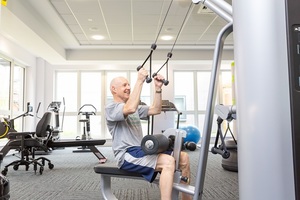
Man doing strength exercises in gymNew physical activity guidelines have been issued by UK Chief Medical Officers. The guidelines emphasise the importance of building strength and balance for adults, and include recommendations for pregnant women, new mothers and disabled people.
Falls are the main reason older people are taken to A&E, and could be avoided through daily activities such as brisk walking, carrying heavy shopping, climbing stairs, swimming and gardening. There is strong evidence that physical activity protects against a range of chronic conditions. Meeting the guidelines can reduce the risk of:

  • type 2 diabetes by 40%
  • coronary heart disease by 35%
  • depression by 30%

The new guidelines are an update to those released in 2011, but the overall message remains the same: any activity is better than none, and more is better still. Under the new guidelines, adults are advised to undertake strength-based exercise at least 2 days a week. This can help delay the natural decline in muscle mass and bone density that starts from around age 50. It is believed that this is a major reason why older people lose their ability to carry out daily tasks.

New advice is also available to encourage good development in babies and children, with the UK Chief Medical Officers recommending lots of ‘tummy time’. As much active play as possible in children under 5 is encouraged, and older children are recommended to be active for an average of 60 minutes a day across the week. To support this, the government will work with nurseries to find fun opportunities for young children to exercise during the day through the new Daily Toddle initiative.

Things about health & social care...
HomeHealthwatch received reports of 17,269 people’s views and experiences of health and social care from their network between Apr to Jun 2019. This briefing highlights what the public are saying about primary care, secondary care and social care. They also take an in-depth look at why personalised care matters and how this can be applied to different sections of the community.

Things to make...
The Hairy Bikers seem to be off on their journeys again and this (not so healthy) wedge salad with blue cheese dressing featured on their latest TV programme ...sounds delicious though!