Showing posts with label neonates. Show all posts

Friday, 20 December 2019

Things in the library 20 Dec...

Things festive and dusty...
We will be having our annual pre-Christmas workout in the library on Monday....our stocktake day. We will be closed all day but will be open in the evening from 17:00 until 19:00.

We are then closed over Christmas and New Year, re-opening on Thursday Jan 2nd so we wish you all a Merry Christmas & a Happy New Year. If you need to return items when we are closed then a book-drop box is available outside the library.

Things about cell genomics...
There is a SITraN external seminar  on January 10th 12:00 - 13:00 in Meeting rooms B02/B03, SITraN, 385a Glossop Road. The speaker is John Marioni - Cancer Research Uk, Cambridge / European Bioinformatics Institute , University of Cambridge
Title: "Using single cell genomics to understand cell fate decisions"
With recent technological developments it has become possible to characterise a single cell’s genome, epigenome, transcriptome and proteome. However, to take advantage of such data it is critical that appropriate computational methods are applied and developed. In this presentation, I will describe some of the computational challenges and the solutions we have developed, focusing particularly on applications in the context of cell fate decisions in early mammalian development.

Things about neonates...
The Healthcare Quality Improvement Partnership has published National Neonatal Audit Programme 2019: annual report on 2018 data.  The National Neonatal Audit Programme (NNAP) reports on key measures of the care provided to babies in 181 neonatal services across England, Wales, Scotland and the Isle of Man.  Included in this annual report for the first time is network level reporting of mortality until discharge from the neonatal unit, and adherence to neonatal nurse staffing standards.

and also...
NHS England has published Implementing the recommendations of the Neonatal Critical Care Transformation Review.  This action plan to implement the recommendations of the Neonatal Critical Care Transformation Review sets out how the NHS will further improve neonatal care with the support of funding set out in the NHS Long Term Plan.

Things about Paediatric Intensive Care...
The Healthcare Quality Improvement Partnership has published Paediatric Intensive Care Audit Network: Annual Report 2019.  This is the sixteenth annual PICANet clinical audit report summarising paediatric critical care that took place in the United Kingdom and Republic of  Ireland between 2016 and 2018.  It provides data on five key metrics: case ascertainment; retrieval mobilisation times; number of qualified nurses per bed; emergency readmissions within 48 hours and mortality in PICU.

Image by Hans Braxmeier from Pixabay 
Things carolling...
If you want to catch some Christmas carol singing in Sheffield over the next few days then this search should bring you plenty of choice.


Things to eat...
Savoury Baklava Recipe for VegetariansIf you are catering for vegetarians (or anyone else!) over the Christmas period there are some fantastic recipes here like this savoury spiced baklava.


Friday, 9 November 2018

Things in the library 9th November...

Things about millennium children...

The Centre for Mental Health and UCL’s Institute of Education have published a report 'Children of the Millennium' which finds that one child in every twelve in the UK has behavioural problems from a young age into their teenage years, putting them at risk of a lifetime of disadvantage and poor health. Children with persistent problems are much more likely to have a multitude of risks early in life, including poverty and housing insecurity, parental mental illness and developmental delay.

The project focused on the analysis of pathways of conduct problems during childhood, comparing the pathways by gender; the impact of multiple risks over time; and pathways of conduct disorder for children with multiple mental health difficulties.
As a result of this work, they are calling for:

  • Concerted action across government to reduce the risk of severe and persistent behavioural problems
  • Government to seek to reduce child poverty and housing insecurity
  • The NHS to continue to boost mental health support to new parents
  • Local authorities to get the funding they need to boost early years services such as Sure Start and to offer evidence-based parenting programmes to families with the greatest needs.
Things about babies and expectant mothers... 

Progress on stillbirths and neonatal and infant mortality has slowed down in the UK in recent years. This explainer from Nuffield Trust looks at the possible reasons why, and what can be done about it.

Things about the High Street...
The Royal Society for Public Health has a new report  'Health on the High Street: Running on Empty 2018' as part of its campaign to offer practical guidance for local authorities and members of the public who want to make their high streets more health-promoting. Their research looked at the health impact of a range of high street outlets – extending their 2015 analysis to include vape shops, convenience stores, off-licences, cafes, and empty shops – and used this measure to rank Britain’s major towns and cities by the impact of their high streets on the public’s health and wellbeing.
A key finding was around the proliferation of empty shops on Britain’s high streets – their clustering in more deprived areas, and the negative impact they can have on community wellbeing and spirit, representing a decline in community assets. 

Things about reading group...
We have just finished reading 'The Turn of the Screw' and our next meeting on Wed 5th December at 17:15 we are sharing Winter / Christmas poems or short extracts accompanied by seasonal drinks & mince pies. We will also be choosing our reading for the next few months – please email your suggestions in advance.

Things about children...
The University of Sheffield has published a series of policy briefings on working against the challenges faced by children and ensuring they have the best possible chances in life. The four policy briefings cover: the effectiveness of early intervention; single parent families; the role of voluntary organisations in supporting and monitoring young carers; the services provided for young people leaving care.
Things about keeping unwell children out of hospital...
As part of the King's Fund series 'Practical approaches to delivering better value in the NHS' this blog is from a paediatrician at Bradford Teaching Hospitals NHS Foundation Trust.  'Better value and a better night's sleep: keeping acutely unwell children and adults out of hospital'  discusses their concept of a ‘virtual hospital’ that adds value by both improving quality (using patient experience and outcomes as key indicators) and reducing costs.

Things to make...
Seeing as the winner of Great British Bake off was a University of Sheffield researcher I thought we ought to have one of his recipes...one of the easier ones! I hope to try this one for chocolate-dipped orange madeleines at the weekend so fingers crossed! 


Friday, 8 June 2018

Things in the library 8th June...

Things about obesity...
The House of Commons Health Committee has published a report which states that current estimates suggest that nearly a third of children aged 2 to 15 are overweight or obese in the UK and younger generations are becoming obese at earlier ages and staying obese for longer. Obesity rates are highest for children from the most deprived areas and this situation is getting worse. Children aged 5 and from the poorest income groups are twice as likely to be obese compared to their most well-off counterparts and by age 11 they are three times as likely. The case for stronger action on this unacceptable and widening health inequality is compelling. The Government is expected to publish shortly a refreshed version of the childhood obesity plan first published in summer 2016. This report outlines the following key areas which demand attention as a matter of urgency by the Government before the next chapter of the plan is finalised: A ‘whole systems’ approach; Marketing and advertising; Price promotions; Early years and schools; Takeaways; Fiscal measures; Labelling and Services for children living with obesity.

Things about child sexual abuse and adverse experiences...

The Department of Health and Social Care have published a report which sets out current knowledge on trauma-informed care approaches to child sexual abuse and child sexual exploitation. It includes personal case studies and recommendations for a trusted relationship model.
They have also published a report about adverse childhood experiences which presents key findings from a study that aimed to
describe: the development and piloting of the Implementation Pack; practitioner views of the Implementation Pack; and practitioner (and where possible client) views on REACh (Routine Enquiry about Adversity in Childhood

Things about Lycra...
An article not on the fashion pages but in European Journal of Paediatric Neurology! Lycra garments have recently been used for children with cerebral palsy, with favourable effects on alignment, biomechanics and neuromuscular activity. An immediate improvement of static balance was observed at baseline, with the first use of the Lycra suit. Further improvement was observed at the 6 month follow up, with a statistical significance for the parameters assessing the antero–posterior axis. Both parents and children also reported functional benefits.

Things to do briskly...
Moderate intensity physical activity means getting the heart rate up and breathing faster. Just 10 minutes of brisk walking a day is an easy way for adults to introduce more moderate intensity physical activity into their day and reduce their risk of early death by up to 15%. To help adults do this, Public Health Englands’s ‘Active 10’ app has been created and it is the only app of its kind that combines intensity and time, rather than just distance.

Things about neonates...
An article on the effects of music on hospitalised preterm neonates was published in January (Developmental Medicine & Child Neurology. 2018 Jan 24;ePub ahead of print) and Evidence-based Neonatology have recently reviewed it and their commentary concludes:
With recent evidence suggesting that preterm neonates may be suffering from sensory deprivation, this review complements previous evidence in suggesting that music therapy may moderate the effects of preterm birth on neurodevelopment. However further investigation through well-designed and adequately powered RCTs, which give appropriate consideration to the nature of the musical stimuli provided, will be essential in establishing the short- and long-term effectiveness and safety of this intervention.
Things about children's eating behaviour...
A review article in 'Nutrients'  looks at the relevant factors involved in the creation of some children’s food preferences and eating behaviours in order to highlight the topic and give paediatricians practical instruments to understand the background behind eating behaviour and to manage children’s nutrition for preventive purposes. In this analysis, parental food habits and feeding strategies are the most dominant determinants of a child’s eating behaviour and food choices. Parents should expose their offspring to a range of good food choices while acting as positive role models. Prevention programmes should be addressed taking into account socioeconomic aspects and education.

Things about peregrines...
If you want to find out more about the University of Sheffield's peregrines then book a free place on their Sheffield Peregrine Evening Thu 14 June  18:00 – 20:30 their will be a chance to view the adults and fledglings from the Churchyard (please bring binoculars, if possible. A few pairs will be available to borrow.) followed by talks (in St George's Church Lecture Theatre).

Things to eat...
Make the most of rhubarb at the moment - and what better than a crumble


Friday, 15 September 2017

Things in the library 15th Sept...

Things for sale...
Book sale @Illingworth Library
We now have on sale some old editions of books which we have replaced with newer stock. Please note that books are sold on a first-come, first-served basis and cannot be reserved, however special arrangements may be arranged for SCH staff who are not based at the Western Bank site.
If you are interested in purchasing any items please come to the Illingworth Library, F Floor, Stephenson Wing, and ask at the counter.
If you would like to see a list of the items available please email us.
Payment may be made in cash /cheque or arrangements can be made to pay by card if over a £5.00 minimum charge  - card payments will be processed via the general office between 9.00am and 4.30pm (closed for lunch 12.30-1.30pm)
Please note that no book sales will be possible within 30 minutes of our closing times.
Our opening hours are: Mon - Thurs 8:45 until 19:00 and Friday 8:45 until 17:00

Things about childhood...
The Good Childhood Report 2017, produced in partnership with the University of York, is the sixth in a series of annual reports published by The Children’s Society about how children in the UK feel about their lives. The report examines the latest trends in well-being over time, explanations for gender patterns in well-being, and insights into how multiple experiences of disadvantage are linked to children’s well-being.
The latest report shows that young people’s happiness is at its lowest since 2010. Fear of crime, living in a family struggling to pay the bills and not having enough emotional support at home are just some of the serious problems that leave teenagers more likely to be unhappy. Teenagers with more than seven serious problems in their life are ten times more likely to feel unhappy than those with none.
Things about health and work in degree courses...
A study mapping the coverage of health and work topics in healthcare and business degree courses.
The study mapped the coverage of six core health and work topics in a selection of business, healthcare and social work courses in England. This included examining:

  • Perceptions among course leaders on the importance of health & work topics for particular healthcare and business occupations;
  • The extent to which health and work was included in course objectives and curricula;
  • How health and work topics are assessed; and
  • Factors influencing the teaching of health and work.

The healthcare courses examined in the study included undergraduate career-entry provision for medicine, dentistry, nursing, allied health professionals (AHP) and social work. The business courses examined in the study included both undergraduate and postgraduate courses, with a particular focus on Masters of Business Administration (MBA) courses.

Things about constipation...
AIM: Childhood constipation is common. We evaluated children diagnosed with constipation, who were referred to an Icelandic paediatric emergency department, and determined the effect of lifestyle factors on its aetiology.
METHODS: The parents of children who were diagnosed with constipation and participated in a phase IIB clinical trial on laxative suppositories answered an online questionnaire about their children's lifestyle and constipation in March-April 2013. The parents of non-constipated children that visited the paediatric department of Landspitali University Hospital or an Icelandic outpatient clinic answered the same questionnaire.
RESULTS: We analysed responses regarding 190 children aged 1-18 years: 60 with constipation and 130 without. We found that 40% of the constipated children had recurrent symptoms, 27% had to seek medical attention more than once and 33% received medication per rectum. The 47/130 control group subjects aged 10-18 were much more likely to exercise more than three times a week (72%) and for more than a hour (62%) than the 26/60 constipated children of the same age (42% and 35%, respectively).
CONCLUSION: Constipation risk factors varied with age and many children diagnosed with constipation had recurrent symptoms. Physical activity may affect the likelihood of developing constipation in older children. 

Things about neonatal sleep...
A recent article about sleep/wake patterns in neonates in Sleep journal 'Neonatal sleep-wake analyses predict 18-month neurodevelopmental outcomes'
The neurological examination of critically ill neonates is largely limited to reflexive behavior. The exam often ignores sleep-wake physiology that may reflect brain integrity and influence long-term outcomes. We assessed whether polysomnography and concurrent cerebral near-infrared spectroscopy (NIRS) might improve prediction of 18-month neurodevelopmental outcomes.
Methods
Term newborns with suspected seizures underwent standardized neurologic examinations to generate Thompson scores, and had 12-hour bedside polysomnography with concurrent cerebral NIRS. For each infant, the distribution of sleep-wake stages and electroencephalogram delta power were computed. NIRS-derived fractional tissue oxygen extraction (FTOE) was calculated across sleep-wake stages. At age 18–22 months, surviving subjects were evaluated with Bayley Scales of Infant Development (Bayley-III), 3rd edition.
Results
Twenty-nine subjects completed the Bayley-III. Increased newborn time in quiet sleep predicted worse 18-month cognitive and motor scores (robust regression models, adjusted r2=0.22, p=0.007, and 0.27, 0.004, respectively). Decreased 0.5–2 Hz EEG power during quiet sleep predicted worse 18-month language and motor scores (adjusted r2=0.25, p=0.0005, and 0.33, 0.001, respectively). Predictive value remained significant after adjustment for neonatal Thompson scores or exposure to phenobarbital. Similarly, an attenuated difference in FTOE, between neonatal wakefulness and quiet sleep, predicted worse 18-month cognitive, language, and motor scores in adjusted analyses (each p<0.05).
Conclusions
These prospective, longitudinal data suggest that inefficient neonatal sleep – as quantified by increased time in quiet sleep, lower electroencephalogram delta power during that stage, and muted differences in FTOE between quiet sleep and wakefulness – may improve prediction of adverse long-term outcomes for newborns with neurological dysfunction.

Things to attend in Sheffield...
Off the shelf  7- 28th October 2017
Now in its 26th year, the 2017 programme includes an array of international, national and local talent who represent diverse, exciting and thought provoking interpretations of the written and spoken word.
The roll call of guests includes; Lee Child, Robert Webb, Brian Blessed, Mark Haddon, George Monbiot, Robert McCrum, Laurie Penny, Stephen McGann, Tariq Ali, Harriet Harman, Hollie McNish, Philip Kerr,  Sunjeev Sahota, Clinton Woods, Michael Rosen, Kate Summerscale, Simon Jenkins, Melvyn Bragg, Jenni Murray, Henry Blofeld, Chris Difford, Tim Dowling, John O’Farrell, Peggy Seeger and many more.
Have a look at the brochure and visit the new website at www.offtheshelf.org.uk where you will find easy links to the box office to make your bookings.

Things to do with a butternut squash...
I had a comedy accident with a large butternut squash this week (details on request) so to get my own back on the squash family I thought I would share one of my very favourite recipes of all time 'Butternut squash & sage risotto' ...be careful! It put me in mind of this famous and still very funny Hoffnung sketch - though no wheelbarrows were involved in my incident.


Friday, 30 September 2016

Things in the library 30 Sept...

Things about ears...
A recent article in Evidence Based Medicine gives a commentary on  Venekamp RP, 'Antibiotics for acute otitis media in children'. Cochrane Database Syst Rev 2015. The EBM commentary  states that . "Data demonstrate that the majority of AOM which undergoes expectant observation will improve, and that antibiotics have benefits that are higher among children with otorrhoea or aged <2 years. This systematic review does not provide insight into the potential prognostication of fever, laterality or other measures of severity."

Things about eggs and peanuts...
Research news in the BMJ considered a systematic review published in JAMA which says "Introducing eggs or peanuts early into infants’ diet is associated with a lower risk of developing egg or peanut allergy" 


Things about school nurses...
A report 'Nursing in Schools' from the National Children's Bureau says that "The confidence of school nurses to provide essential support to children with long-term health conditions like diabetes and asthma risks being undermined by high work loads and having to work across numerous schools."  The research also indicated a lack of understanding amongst parents about the role of the school nurse, and that poor communication with parents was a barrier to them supporting children.

Things about neonates...
Monitoring the standard of care provided by specialist neonatal units is essential to inform efforts to give all babies the best possible chance of surviving and reaching their full potential. The monitoring is achieved through the National Neonatal Audit Programme (NNAP), which encourages individual neonatal units and regional networks to deliver the very highest levels of care to babies and families by reporting their outcomes against standards described by professional organisations. The annual report on the 2015 data has just been published

Things about Journal Club...
By EriKolaborator - Own work, CC BY-SA 3.0,
commons.wikimedia.org/w/index.php?curid=30088978
For reasons we don't quite understand there have been a few tumbleweed sessions recently which is unusual and disappointing for all those that put the effort into organising and preparing presentations. Due to the low attendance Sarah has sadly taken the decision to suspend the current season of journal club after the presentation of 20th October 8-9 am. She says "Journal club cannot run without presenters and whilst I am happy to advertise sessions, oversee the presentations and provide the homemade muffins and drinks I cannot present the papers as well.  This needs YOU and your colleagues!"

She is planning a relaunch in the new year and would appreciate any comments you have to make as to what may make it easier for people to attend, the process, the days etc and if anyone would like to provisionally volunteer that would be very welcome!

Things about Clinical commissioning...
NHS Clinical Commissioners has launched a new publication to support CCGs in making difficult decisions about prioritisation of resources and changes to local services. This comes at a time when the NHS is going through a period of major change to achieve long-term sustainability and transformation making potentially hard choices increasingly inevitable.
Produced in collaboration with the University of Birmingham, ‘Making Difficult Decisions’ sets out factors that can enable CCGs to successfully command the confidence of the public, patients, local politicians and other key stakeholders when making changes. It draws on both academic research and practical insight from commissioners, patient groups and NHS England.

Things to make...
If you will miss the home-bakes in Journal Club then here is the recipe for one of the favourites - Cheese onion and olive scones.

Friday, 29 July 2016

Things in the library 29 July...

Things published...
The NHS Annual 2015/16 report has been published and describes the work of NHS England throughout 2015/16 and outlines some of the most significant achievements and challenges.

The Department of Education has published a research report "Eight-year-olds identified in infancy as at risk of harm: report of a prospective longitudinal study"

The Care Quality Commission has published a review "Identifying and managing clinical risks in newborn babies and providing care for infants in the community who need respiratory support" 

Things to get involved with...
Helping children get back on track...The NSPCC and ESRC (Economic and Social Research Council) will put out a call at the end of July for proposals contributing to their joint interests in mental health and the NSPCC’s new research programme: Helping children get back on track. The aim of this programme is to increase the evidence base about what kinds of therapeutic and/or social intervention can help children with experience of abuse. Full details will be provided with the tender at the end of July. To register to receive more information about the proposal, please contact researchadvice@nspcc.or

Holiday reading things...
Don't forget we have an excellent selection of leisure reading books to suit everyone - why not pop up and take a look before you head off for your holidays. Or you can see them on the catalogue.


Things mostly open...
We remain open throughout the summer except for August Bank Holiday. Starting from next week there will be some evening closures - see the Communications bulletin each week for details or check our daily opening hours here.

Things to eat...
Many years ago when Web 2.0 was a "new thing" I went on a training session to find out what it was all about. As part of that we were introduced to concept of a 'Blog' and one that we looked at was written by Clotilde Dusoulier who is a French food writer based in Paris -  writing in English. Her blog which she started in 2003 is called  Chocolate & Zucchini...and I have been following it ever since. If you want to you can follow it yourself or sign up to a newsletter she produces. I was particularly taken with this recipe and hope to try it out soon - Feta and fresh herb quick bread

Friday, 9 January 2015

Things in the library 9 Jan

Happy New Year
We wish all our blog readers and library users a Happy New Year

Things happening 
InfoBites in the library on Tuesday 13 Jan (next week) at 13:00 for 20 mins on Google Searching for everyone - tips and tricks...this is a re-run of a previous session. Please come along with your lunch if you wish and enjoy our cakey bites.
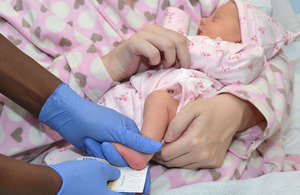
Newborn baby having a blood spot test
Things for neonates
On Monday 5 January the number of conditions newborn babies are screened for in England increased following a successful pilot study led by Sheffield Children's, Professor Jim Bonham was national lead for the project. Full details here

Things published
NICE has published an evidence update "Spasticity in children and young people with non-progressive brain disorders" find the full text here. This is a summary of selected new evidence relevant to NICE clinical guideline ’Spasticity in children and young people with non-progressive brain disorders: management of spasticity and co-existing motor disorders and their early musculoskeletal complications’ (2012)
Public Health England has published a support pack for A & E departments 'Young people's hospital alcohol pathway' read it here
It is aimed at A&E clinicians, hospital managers, substance misuse and young people’s commissioners and includes a set of key questions or prompts for professionals to help them develop care pathways within A&E and into other services for young people.

Things about CAMHS
The Tavistock and Portman NHS Foundation Trust (The Tavistock) and the Anna Freud Centre (AFC) formed a consortium to further develop and refine a new model for CAMHS based on their shared thinking in this area: this is now known as the THRIVE model.
They say:
"We are sharing our thinking as it develops to help inform the current national debate on the future of CAMHS and as a basis for future provision. We are not presenting THRIVE as a tried and tested one-size-fits-all implementation model, nor is the language and terminology for different groups fixed at this point. Whilst AFC and Tavistock do have thoughts on implementation in particular contexts, this paper does not purport to be a how-to guide.
We feel that the THRIVE model offers a radical shift in the way that services are conceptualised and potentially delivered, along with suggestions for how they might be reviewed and improved. Through wider discussion,planning and, in time, the commissioning processes, the model will appropriately undergo refinements anddevelopments as to how it can be applied to local contexts. "

A search for CAMHS on our library catalogue will give you a link to this resource.

Two things for health visitors

  • The Department of Health is developing an outcome measure of child development at age 2 – 2½ years, the data for which will be here published in the Public Health Outcomes Framework from 2015 find out more 
  • NHS England has published the new health visiting (HV) service specification for 2015-16. Read the full text here

Things done well by the University of Sheffield
MDH Research ExcellenceThe results of REF 2014 demonstrate world-leading excellence, impact and strength across all departments within the Faculty of Medicine, Dentistry & Health:
  • Biomedical research  was ranked No 1 for world-leading quality in the UK.
  •  84% of research across the Faculty was assessed as being world-leading 
  • For clinical medicine, 84% of our research outputs were judged to be world-leading 
  •  Schools of Dentistry, Nursing and Human Communication Sciences (HCS) together ranked 12th of 94 in the UK for their world-leading and internationally excellent research
  • 95% of the work in the School of Health & Related Research (ScHaRR) was top rated for impact, the second highest score in the UK. 
More things on research
Do you need to know what work is being done in your field?  Find research in your area of interest with a quick and 
easy search on the European Union Clinical Trials Register 

..keeping the European theme

Things to make
©Seiler

Although it is a few days late (hope all your decorations are down!) but a special food made in France the 
‘La Galette des Rois’ is made for the Epiphany, traditionally observed on January 6th, a biblical date to celebrate the arrival of Magi (also known as the three Kings or the three Wise Men) visiting Jesus in his manger. Find a recipe here. The custom is to hide a little charm or fève within, and the lucky guest who finds it is crowned King or Queen. So when you buy a Galette des Rois in the bakery, a paper crown will be included.


Friday, 20 June 2014

Things in the library 20 June

Things published by NICE

New NICE guidance published this week on "The MAGEC system for spinal lengthening in children with scoliosis" it can be read here 

Also "Antibiotics for early-onset neonatal infection" an evidence update can be downloaded here 

Things to read
Trisha Greenhalgh has published an essay in the BMJ this week 'Evidence based medicine: a movement in crisis?" discussing distortion of evidence, too much evidence, marginal improvements and risk assessment, algorithmic rules and multimorbidity are some of the problems she identifies and she calls for a return to 'real evidence based medicine'. It can be read in full here


"Mental health and behaviour in schools" Department for Education advice for school staff published this week can be read here


Things we did

We had our annual library staff away day this week where we had an interesting discussion on our role within the trust as regards education and we set our objectives for future developments...we didn't go very far away but had a good view of the Henderson's factory!

Also this last week journal club was held - the next one is Tuesday 1st July 17:30-18:30...book the date now


Things to BBQ
With fine weather forecast - and the longest day of the year on Saturday it sounds like a good opportunity for a BBQ.  Mackerel with sizzled garlic, ginger & tomatoes is good for something different or perhaps Stuffed peppers and a great BBQ dessert favourite in my family is Pineapple in lime, vanilla and rum syrup