Showing posts with label environment. Show all posts

Friday, 14 February 2020

Things in the library 14th Feb...

Things to visit the library for today...
Free home-made heart biscuits (while stocks last) for all our library users today...and a reminder that via our Book a Librarian service you can arrange 1:1 or small group training on a variety of subjects....any time of the year not just on St Valentine's Day.


Things for a healthy childhood...
A safe, supportive and happy childhood environment is widely understood to be vital for a child’s development, health and wellbeing over the short- and long-term. Conversely, an established body of evidence shows a correlation between a disruptive, adverse or chaotic childhood environment and an increased prevalence of physical and mental health problems. Despite this established evidence base, the BMA's analysis of recent data highlights insufficient investment in England across a range of services to support a healthy childhood, with funding for a number of different services being cut in recent years. This lack of resource is likely to have an adverse impact on child health in England.

Things about microbiomics...
The Department of Neuroscience at University of Sheffield will co-host an event on Thursday 16 April to mark the launch of the Sheffield Microbiomics Network. This one-day symposium will take place in Sheffield (location TBC) and is open to anyone working in a field relating to microbiomics, or who is keen to embark on research in this area. Please register using this link. Anyone involved in microbiomics research in Sheffield (in any university, NHS or other institution) would be very welcome to join.

Things about indoor air...
There seems to be plenty of air outside at the moment...I just wish it would stop rushing around so fast! However whilst we are all stuck inside at this time of the year this RCPCH report on indoor air quality seems timely. This report is based on a systematic review of the science of indoor pollution, and conversations with children, young people and families. They make recommendations for Government and local authorities, and provide guidance for families.

Things about resilience...
Too many children and young people nationally do not receive the support they need to improve their mental health and wellbeing. There is ample evidence that, despite increased investment in, and policy focus on, mental health services for children and young people, the numbers of children and young people requiring support are going up. Thresholds for accessing support remain high, waiting times are long and there is significant inequity in provision between different local areas.

The purpose of this research from the Local Government Association is, firstly, to explore some of the factors which are contributing to this nationally challenging context and, secondly, to develop an evidence base for how local government and its partners can work most effectively together to deliver a coherent and joined-up offer of support for children and young people’s mental health. The research is based on a review of the existing evidence base, workshops with around 80 participants from councils and their partners in health and in-depth engagements with eight fieldwork areas.

Things about the NHS...
When the NHS Long Term Plan was published in January 2019 Healthwatch were asked by NHS England to engage with people across the country about how people wanted the priorities to be implemented locally. Here's what over 40,000 people told them. Key findings summarised below:

  • People affected by cancer, and heart and lung conditions had a much better experience of care services than people with other issues.
  • The positive feedback about cancer and heart and lung services appeared to be for a variety of reasons, including speed of diagnosis and treatment, access to rehabilitation, and quality of information and communication from professionals.
  • People affected by other issues, especially mental ill health, dementia or learning disabilities, told us that the support often wasn’t in place for them and that professionals did not give enough consideration to their full range of needs.

Things about St Valentine...

On February 14, around the year 270 A.D., Valentine, a holy priest in Rome in the days of Emperor Claudius II, was executed. Under the rule of Claudius the Cruel, Rome was involved in many unpopular and bloody campaigns. The emperor had to maintain a strong army, but was having a difficult time getting soldiers to join his military leagues. Claudius believed that Roman men were unwilling to join the army because of their strong attachment to their wives and families. To get rid of the problem, Claudius banned all marriages and engagements in Rome. Valentine, realizing the injustice of the decree, defied Claudius and continued to perform marriages for young lovers in secret. When Valentine’s actions were discovered, Claudius ordered that he be put to death. The sentence was carried out on February 14, on or about the year 270.
Legends vary on how the martyr’s name became connected with romance. The date of his death may have become mingled with the Feast of Lupercalia, a pagan festival of love. On these occasions, the names of young women were placed in a box, from which they were drawn by the men as chance directed. In 496 A.D., Pope Gelasius decided to put an end to the Feast of Lupercalia, and he declared that February 14 be celebrated as St Valentine’s Day.

Things to make...
A special chocolate and chilli dessert, very simple...and sinful!


Friday, 18 October 2019

Things in the library 18th October...

Things about refugee and migrant children...
An article in Archives of Disease in Childhood  discusses 'How can we meet the health needs of child refugees, asylum seekers and undocumented migrants?'. Over half of the world's refugees are children. Child refugees, asylum seekers and undocumented migrants are exposed to multiple risk factors for poor physical and mental health throughout their migration experience. International treaties and national legislation recognise child migrants' 'right to health' and equitable access to healthcare, yet restrictive immigration policies, health system challenges and service provider barriers to care impede translation into practice. This review explores how the experiences of child refugees, asylum seekers and undocumented migrants in England impacts on their health and presents recommendations as to how their health needs can be met. This article is available to you via your NHS OpenAthens account. If you don't have one set up then join here.

Things about an App...
The NHS App has been rolled out in many areas. The NHS App is for people aged 13 and over who are registered with a connected GP surgery. You can use some of the app's features without your GP surgery being connected.95% of surgeries are now connected to the NHS App.


Things about another App...
Cover artDid you know there is an App for our library system which sends you notifications about overdue items, reminds you of reservations and allows you to renew your loans. It is rather slower than we would like, but it does work well and the developers are working on the speed. You can find it in your normal App store by searching for 'MyCirqa' and then start typing 'Sheffield' to select our library - login with your library number (first group of numbers on the back of your staff card for most of you) and your PIN. If you didn't set up a PIN when you joined the library please email us to request one.


Things about the indoor climate...

The 'healthiness' of indoor environments such as homes, schools and work places has recently received increasing attention and been the subject of publications and guidelines by governmental agencies and the World Health Organization (WHO). The WHO has distinguished between the following aspects of the indoor environment: thermal environment; air quality environment; noise environment; and light environment. The combination of all those is also referred to as indoor climate. The objective of this study was to assess the impact of poor indoor climate on child health.

Things about public health...
The What Good Looks Like (WGLL) programme aims to facilitate the collective efforts of local organisations and wider society (the system) towards  improvements in their population health outcomes. This 'What Good Children and Young People’s Public Health Looks Like' represents the practical translation of the core guiding principles of the new Quality Framework for the Public Health system and features of what good children and young people’s health looks like in any defined place. It was developed collaboratively through the synthesis of existing evidence, examples of best practice, practitioners’ experiences and consensus expert opinions. It is intended to serve as a guide and will be iterative with regular reviews and updates when new evidence and insights emerge.

Things to eat...
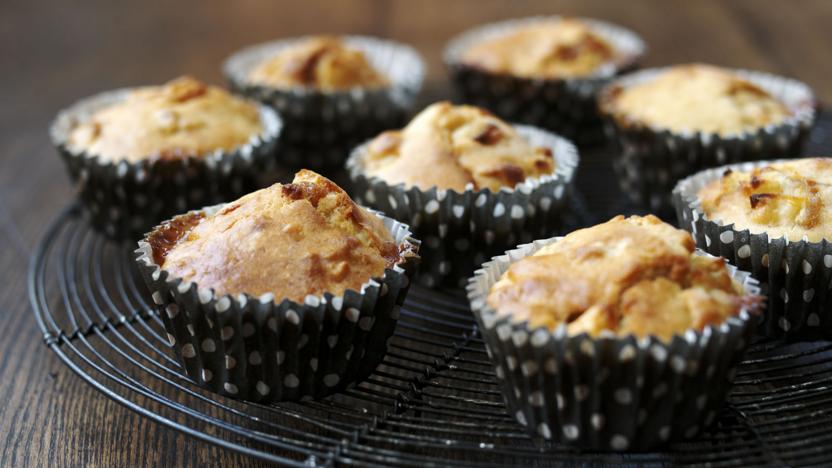
Toffee apple muffinsWe are coming up to the season of bonfire night so I thought these toffee apple muffins sound just the thing.


Friday, 6 July 2018

Things in the library 6th July...


Things about the outside...
An article in J Epidemiol Community Health looks at the 'Mental health benefits of interactions with nature in children and teenagers: a systematic review.' and the findings support the contention that nature positively influences mental health; however, in most cases, additional research with more rigorous study designs and objective measures of both nature and mental health outcomes are needed to confirm statistically significant relationships. Existing evidence is limited by the cross-sectional nature of most papers.

The next birthday...
Celebrating the 70th birthday of the NHS has prompted the Healthcare Financial Management Association (HFMA) to do some crystal ball gazing and look at what the NHS might be like at 100. Their conclusions include:
"The challenges facing the NHS over the next 30 years are significant. Some of these we can see developing now, others are beyond our comprehension as the technology does not yet exist." 
"However, the people that we are training now, and in the coming decades, need to be prepared to face the challenges and continue to meet the guiding principles of the NHS, that it is free at the point of delivery and based on need, not ability to pay. Developing technologies that are changing working practices require a flexible workforce that can adapt and learn throughout their working lives. And increasing personalisation across both care and medicine means that the challenge of efficiency through standardisation will be replaced by a more bespoke approach that needs to remain equitable for the whole population. These future developments are set against a backdrop of  a growing, and ageing, population with increasing needs for care while funding for that care is decreasing. The challenge for the NHS and the wider health and care economy is to have a sustainable and effective service that meets the population’s needs in 2048."


Things about obesity & depression...
Childhood mental illness is poorly recognised by healthcare providers and parents, despite half of all lifetime cases of diagnosable mental illness beginning by the age of 14 years.Globally, depression is the leading cause of disease burden, as measured by disability-adjusted life years, in children aged 10–19 years.Untreated, it is associated with poor school performance and social functioning, substance misuse, recurring depression in adulthood and increased suicide risk, which is the second leading cause of preventable death among young people.The resulting cost to the National Health Service of treating depression is estimated at over £2 billion, and the wider social and economic impact of depression is likely to be considerable.This is the background to a  systematic review and random-effect meta-analysis of observational studies to see if  obesity is associated with depression in children.

Things about truth...
The Independent Inquiry into Child Sexual Abuse (IICSA) has published Victims and Survivors Speak Out - accounts of child sexual abuse shared with the Truth Project, set up for victims and survivors of child sexual abuse to share their experiences in a supportive and confidential setting.


Things about smoking and hospitals...
A major new report has been released by the Royal College of Physicians calls for a radical change in the way the NHS treats smoking, by providing opt-out cessation services as a routine component of all hospital care. The report found that by giving smokers the help they need to quit smoking while in hospital it will save lives, improve quality of life as well as increasing life expectancy for all smokers, and help to reduce the current £1 billion per year cost to the NHS of smoking by patients and staff. The report ‘Hiding in plain sight: Treating tobacco dependency in the NHS’ from the RCP’s Tobacco Advisory Group says that: "Treating tobacco dependency is not just about preventing disease: in many cases it represents effective disease treatment. Clinicians working in all areas of medicine can improve their patients’ lives by helping them to quit."


Things to make...

A really easy and yummy cake that kids can make almost by themselves 'Raspberry Yoghurt Cake'

Friday, 11 May 2018

Things in the library 11 May...

An image of the shop showing reusable coffee cupsThings without plastic...
The University of Sheffield Student Union (just down the road) has opened a ground-breaking new shop dedicated to waste-free goods. The Zero Waste Shop sells a huge variety of herbs, spices, nuts, cereals and grains along with household goods, all of which are free from plastic packaging. The outlet also stocks a range of sustainable everyday products including recycled kitchen roll, biodegradable refuse sacks and bamboo cutlery and kitchenware. There is also a refill station where you can fill up bottles with household essentials including soap, laundry detergent and surface cleaner. Cheaper and better for the environment, refilling is a great alternative to buying a new plastic bottle every time you run out of these items. Products are sold by weight, so you can buy as much or as little as you need. Take your own container, pick up a recyclable paper bag, or invest in a reusable jar or lunchbox from the wide range on offer in the shop. We are all welcome to use it - not just for University staff or students.

Things about obesity...
2020health’s third report on obesity since 2014 highlights that strong and mandated central policy, supporting bold, holistic local action, is still needed to impact what is arguably the greatest health challenge of the 21st century. Tackling obesity - What the UK can learn from other countries (Matt James, Dr Aaron Parkhurst and Jon Paxman) examines topical obesity intervention strategies from around the world to frame the question: can the UK learn from policy abroad?


Things about news items...
In the news last week was a report stating that bath oils for childhood eczema provide 'no clinical benefit'. When you hear items like this and want to know what the article referred to really said and see an appraisal of the research then go to the NHS behind the headlines site. Where the following points will be covered.

  • Where did the story come from?
  • What kind of research was this?
  • What did the research involve?
  • What were the basic results?
  • How did the researchers interpret the results?
  • Conclusion
Things across the road...
Take a step back in time and come along to Weston Park May Fayre on Sunday 20th May for a wonderful nostalgic day out with all of your family! Enjoy live traditional and contemporary music from the restored Victorian bandstand. The event is free and there will be lots of attractions and entertainment between 11am and 5pm to suit all of the family including: Carousel, Helter-Skelter and Children’s Rides, Artisan Crafts Marquee, Classic and Vintage Cars, Victorian Characters, Children’s Art and Craft Activities, Food and Refreshment Stalls and much more…

Things to top your toast...
Here are six toast toppings for spring brunch eating and none takes more than 10 minutes to make.